
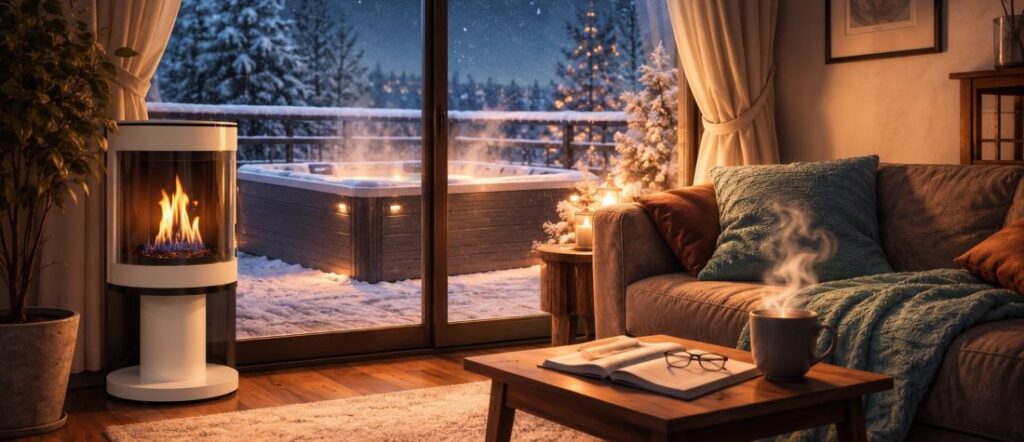
As Portland heads into its cool, rainy season, your home becomes the ultimate haven. This guide shows how to transform damp, gray weather (with average highs around 47°F in winter) into cozy, enjoyable days. We’ll cover choosing the right fireplace (gas, wood, pellet or electric), selecting and caring for a hot tub, and adding a sauna or other cozy features. You’ll get practical maintenance and safety checklists (chimney cleaning, spa care), a seasonal timeline, and budgeting tips. Throughout, see how Classic Pool Spa & Hearth’s local showrooms and in-house experts make it easy to bring comfort home – all under one roof.
Portland Winter Climate & Home Comfort
Portland’s climate is cool, cloudy and rainy through fall and winter. Starting mid-October, overcast skies and steady drizzle become the norm, with daytime highs hovering in the 40s–50s and frequent light rain. The heaviest rains come late fall through early spring, so homes need good heating and weatherproofing. Long rainy seasons and moisture can even damage chimneys and masonry if neglected. Homeowners often feel the chill by October – and dread dragging themselves through winter. But with the right upgrades, your home can be a warm, inviting retreat.
“Portland’s long rainy seasons and moisture exposure can quietly deteriorate chimneys and fireplaces between burn seasons. An annual inspection and cleaning is key to catch moisture damage and prevent fire hazards.”
By planning in fall, you beat the winter rush. Now’s the time to line up fireplace service, check smoke/CO detectors, and prep your backyard. We’ll break it down into steps, tools, and products to make rainy days something you actually look forward to.
Warm Up Inside: Fireplace & Stove Options
Nothing beats the ambiance and heat of a live fire on a cold, rainy evening. Classic’s showrooms carry high-efficiency fireplaces in all fuels and styles – gas, wood, pellet, and electric. Each type has pros and cons:
Comparing Fireplace Types
Type | Fuel | Efficiency | Ambiance | Maintenance | Good For |
Gas | Natural gas/propane | High (80–90% for inserts) | Bright real flames | Minimal: annual inspection, gas leaks check | Quick heat, remote control, clean operation |
Wood | Firewood | Moderate (60–70%) | Crackling rustic fire | High: chimney sweep, ash cleanup | Backup heat, off-grid use, cost-effective fuel |
Pellet | Wood pellets | High (70–80%) | Even flame (cozier than gas) | Medium: refill pellets, vacuum ash, vent cleaning | Easy fuel handling, steady heat output |
Electric | Electricity | Lower (100% convective) | LED flame effect | Low: just dust and clean | Easy DIY, no vent needed, supplemental heat |
Budget Guide for Home Comfort Upgrades
Budget Level | Fireplaces | Hot Tubs | Saunas (Traditional) |
Low | ~$200–$800 (electric plug-ins) | ~$4k (small basic) | ~$3k (DIY kit) |
Mid | ~$3k–$6k (gas insert or electric built-in) | ~$8k (medium-size) | ~$8k–$14k (standard install) |
High | ~$8k–$18k (masonry wood-burning, premium gas) | ~$12k–$15k+ (luxury model) | $20k–$50k+ (custom outdoor sauna) |
Table: Typical budget ranges for home comfort upgrades (prices vary by features and installation). If you need exact figures, ask our experts – we handle permits and quote every job.
Installation Tips
Any new gas or wood-burning fireplace requires permits and safe venting. Classic’s in-house installers follow local codes, ensuring your new hearth is sealed properly. All gas and wood fireplaces must have yearly inspections – call a CSIA-certified sweep to avoid moisture damage or hidden hazards from Portland’s damp winters. And always install smoke and carbon-monoxide detectors on every floor when adding any combustion appliance.
Hot Tubs: Year-Round Backyard Retreat
A hot tub isn’t just summer fun – it’s a spa retreat for rainy Oregon too. With a high-tech insulated shell, you can keep it warm in any weather. In fact, American Whirlpool tubs (available at Classic) use a patented Northern Exposure® insulation system: copper panels reflect heat back into the water, and 3M Thinsulate™ wraps the exterior to lock in warmth. The result: energy-efficient operation even on cold nights, and whisper-quiet pumps.
Year-Round Use
Unlike pools, a hot tub can be used 365 days a year. Stepping into hot water while the rain falls is a PNW favorite. The hydrotherapy jets soothe sore muscles and stress, making your home feel like a luxury retreat. Classic’s hot tubs come in all sizes (2 to 8 person) and seating configurations, with features like physician-designed jet placements and cushioned headrests for maximum comfort. You can test them all at our showrooms – we even encourage a “wet test” so you can feel the jets before buying.
Covers & Insulation
Always use a good cover to save heat and protect the water. Check covers in fall for rips or waterlogging. If a cover sags, its foam may be waterlogged and not insulating well. Remove snow with a soft broom – heavy ice can damage the cover’s core. Bonus tip: For extra insulation, a floating thermal blanket on the water under the cover can cut heat loss and energy bills.
Water Care & Safety
Even in winter, the water needs care. Test and balance chemistry weekly, and shock the spa regularly to kill contaminants. Lower sanitizer levels alone can allow bacteria even in cold weather. Keep the water level topped up (never let it dip below jets) to avoid pump damage. Remove debris or leaves promptly, and replace filters monthly to maintain flow and heater efficiency. Always keep one cover locked or secured; curious kids or pets should never access an unsupervised hot tub.
Hot Tub Maintenance Schedule
Hot Tub Maintenance Task | When | Notes |
Check & balance water (pH, sanitizer) | Weekly (all year) | Use a test kit; add chemicals as needed |
Shock the water | Weekly or biweekly | Destroys organic waste that sanitizer can’t handle |
Clean/replace filters | Monthly (or as needed) | Hose off or soak in filter cleaner to ensure flow |
Inspect equipment & components | Weekly | Run jets/pumps, look for leaks or odd noises |
Cover check & snow removal | Fall and as needed | Fix tears, ensure cover locks; brush off snow |
Circulate water | Continuous in cold weather | Leave on freeze-protect mode so water keeps flowing |
Path safety | Before use (or after storms) | Keep paths clear of ice; use non-slip mats |
Our hot tubs are built on steel frames and designed for Portland’s damp climate. Enjoy a steaming soak in the rain – just be sure to keep the path clear (snow and ice removal) and use mats to prevent slips. If power outages hit, leave the cover on; a filled tub can stay warm for 1–2 days, and use a space heater near the equipment as a backup.
Saunas: Your In-Home Wellness Escape
For a full sauna experience, Classic offers both infrared and traditional options. Saunas deliver dry heat that penetrates deeply, improving circulation and relaxation. A traditional electric heater sauna (the same type Finns use) can heat up to ~180–200°F. A budget-friendly infrared sauna (portable, plug-in) can be as low as ~$1,000, but it gives less ambient heat and no steam.
Home Sauna Types
Most homeowners invest $8K–$20K for a quality sauna that lasts decades. Classic can help you choose one that fits your space (garage conversion vs backyard shed). Remember to budget for electrical work: traditional saunas need a 240V circuit and proper ventilation.
Benefits
Saunas clear the mind and relax muscles. A home sauna means spa-level health benefits any time – great for sore backs or cold-season sniffles. Build some bench seating, pour water on the hot rocks for steam, and enjoy a Nordic ritual at home.
Cozy living doesn’t have to stop at the door. Outdoor features can extend your comfort into the rain:
By caring for your outdoor spaces, you ensure you want to be outside, even in chill and drizzle. A hot tub, a warm fire, and some ambiance can make a backyard as inviting as indoors.
Fireplace/Chimney
Hot Tub/Spa
Keep water chemistry in range weekly, circulate the pump on freeze-protect mode, and clear snow from covers and paths. Store chemicals safely in a cool dry place, and never leave children unattended.
Sauna
Follow manufacturer guidelines for heaters. For wood-fired saunas, follow all clearance and hearth requirements (like fireplaces). Don’t leave the heater on unattended for long periods. Keep towels and brooms handy for spills.
Pool (Off-Season)
If you have a pool, winterize pumps and cover the pool to protect it. Classic offers full pool care too.
Fall Home Prep
Pre-Winter Checklist
Schedule chimney sweep; test detectors; cover or drain water features as needed; service heating; gather supplies (wood, propane, spa chemicals); inspect rooftop and gutters; and clear walkways of debris.
Pre-Winter Home Comfort Timeline (October–February)
Month | Recommended Tasks |
October 2026 | Inspect and clean chimneys and vents |
November 2026 | Service HVAC, clear gutters, stock firewood |
December 2026 | Install fireplace or stove, test smoke/CO detectors, finalize hot tub cover |
January 2027 | Balance hot tub water chemistry weekly, clear snow from pathways |
February 2027 | Schedule any remaining services, check sauna heater and ventilation |
Your One-Stop Shop: Classic Pool Spa & Hearth
At Classic Pool Spa & Hearth, we’ve been Portland’s backyard comfort experts since 1979. Our Beaverton and Clackamas showrooms bring together everything you need under one roof: from live-burning fireplaces (Gas, Wood, Pellet, Electric) to American Whirlpool hot tubs and custom saunas. We are an authorized dealer for premium brands and handle everything in-house – design, installation, and service.
Come see us to feel real fires and try hot tubs in person: our showrooms have fully operational displays and trained staff. We provide free consultations to match you with the right unit for your home and budget. Plus, our team handles permitting and gives expert advice on energy rebates or financing, making any upgrade smooth.
Whether you’re planning a full remodel or a small comfort boost (new fireplace insert or spa cover), Classic is your local partner. Stop by Classic Pool Spa & Hearth in Beaverton or Clackamas to explore options firsthand. We promise a stress-free process from day one – no subcontractors, no guesswork, just one team that stands behind your home comfort for years to come.